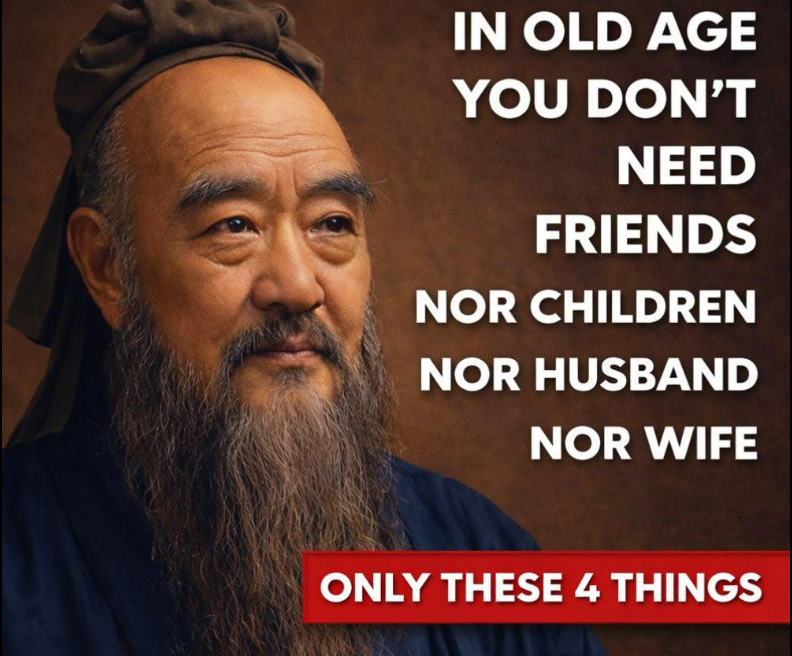
Confucius believed that a noble person never loses self-respect, even if they lose everything else.
Throughout life, many people accept humiliation for convenience, stay silent for comfort, or betray their own values out of fear. In the moment, these choices may seem practical. But over time, living against oneself leaves a deep internal scar.
A serene old age is built on quiet self-respect—not aggressive pride or social appearance.
It means being able to look back without overwhelming shame. Acknowledging mistakes, but also remembering honesty. Choosing caution out of wisdom, not out of fear.
Those who preserve their dignity grow old with calmness. Even in silence, their presence carries peace.
2. Our Relationship with Time: Learning to Live in the Present
Another key principle is how we use time.
Many people live trapped in the past or obsessed with the future. Youth is spent waiting, adulthood rushing, and old age regretting.
True peace belongs to those who learned to be fully present at each stage of life.
This is not about chasing superficial pleasure. It is about cultivating genuine presence:
truly listening to others
appreciating simple moments
being fully attentive with loved ones
enjoying everyday life as it unfolds
Modern psychology confirms this insight: those who lived with greater awareness of the present experience less emotional emptiness in old age.
Their memories are not warehouses of regret, but archives of meaningful experiences.
3. Human Relationships: Our True Wealth

Confucius emphasized that human beings do not exist in isolation, but within relationships.
Many elderly people suffer not only from loneliness, but from damaged relationships—words never spoken, pride that prevented apologies, wounds that hardened into habit.
A harmonious old age belongs to those who learned to care for relationships with respect, not destructive self-sacrifice.
It means:
listening without humiliating
speaking without unnecessary harm
stepping away without destroying
returning without accusing
Harmony begins in the family and extends outward into society.
Those who live in constant conflict often arrive at old age filled with resentment. Those who learn reconciliation—even with imperfection—arrive with acceptance.
4. Life’s Meaning: Leaving More Than Memories
Continued on next page: