Defend your values, even in small decisions. Dignity is built daily.
Practice mindful presence in conversations and simple moments.
Do not accumulate resentment—resolve conflicts early to avoid future emotional burdens.
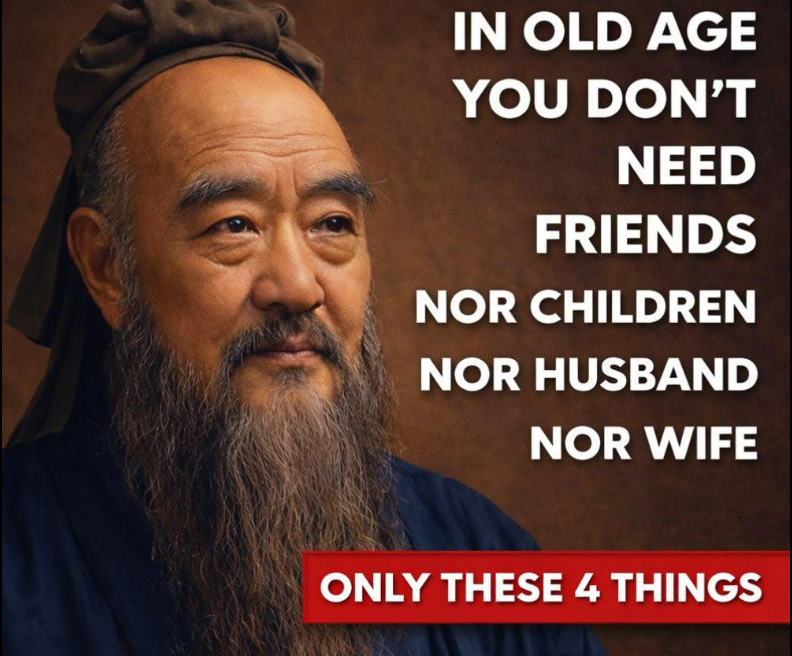
For Confucius, meaning is not necessarily found in grand achievements or fame. It is found in leaving behind:
clarity instead of confusion
security instead of fear
order instead of chaos
learning instead of unnecessary pain
A person who understands the reason for their life does not fear aging. They do not cling desperately to youth or envy the young.
They become a source of support for others.
When life has meaning, old age becomes a quiet form of fulfillment.
A Silent Lesson: Stop Negotiating with Life
There is a common trap—living as if life were a contract.
“I’ll endure now to be rewarded later.”
“I’ll give up what I want, and someday it will all balance out.”
This internal bargaining often leads to frustration.
Confucius proposed something different: live according to what is right for you, without demanding compensation from fate.
Modern psychology calls this an internal locus of control. Philosophy calls it maturity.
Well-being does not depend on time, politics, family, or circumstances. It depends on one’s relationship with lived experience.
The Truth About Aging
Old age does not create character. It reveals it.
If there was gratitude, it deepens it.
If there was resentment, it magnifies it.
If there was wisdom, it makes it visible.
If there was inner chaos, it exposes it.
That is why Confucius insisted on daily inner work.
Those who cultivate themselves in youth rest peacefully in old age. Those who avoid it must confront it later—when they have less strength.
Practical Reflections
Continued on next page: