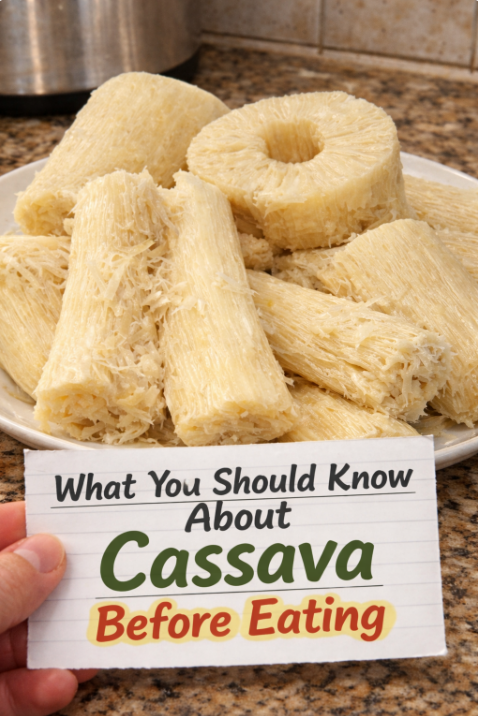
Raw cassava naturally contains substances called cyanogenic glycosides. These compounds can release small amounts of cyanide if the root is eaten raw or not properly processed.
This does not mean cassava is unsafe when prepared correctly. In fact, traditional preparation methods—such as peeling, soaking, fermenting, drying, and cooking—remove most of these compounds.
That is why cassava has been safely consumed for centuries in many cultures.
Possible Health Concerns if Cassava Is Not Prepared Properly
1. Cyanide Exposure
Eating raw or undercooked cassava may expose the body to cyanide compounds.
Symptoms associated with excessive exposure may include:
-
headaches
-
dizziness
-
nausea
-
weakness
-
breathing difficulties
Proper cooking significantly reduces this risk.
2. Effects on Thyroid Function
Some research suggests that frequent consumption of poorly processed cassava could affect thyroid health, particularly in areas where iodine deficiency is common.
Cassava compounds may interfere with iodine absorption, which is important for normal thyroid function.
Maintaining a balanced diet with adequate iodine intake helps reduce this concern.
3. Nutritional Imbalance in Extreme Diets
In regions where cassava is consumed almost exclusively due to food scarcity, studies have linked poorly processed cassava with certain neurological conditions.
However, these cases are typically associated with extreme dietary limitations, not with normal diets where cassava is one of many foods.
Nutritional Benefits of Cassava
Continued on next page: